

What Matt Damon Gets Wrong About Attention Spans
Netflix didn't break audiences. Hollywood's (lack of) thinking has.

Matt Damon recently went on Joe Rogan to complain about how Netflix is rewriting movie structure to fit attention-deficient audiences. While he’s not entirely wrong that audience attention spans have evolved since he began his career in Hollywood, his malice towards Netflix is a bit misdirected and even misinformed.
I can’t argue in defense of lazy studio executives with bad notes like “spell it out for the audience.” But this tired narrative—that audiences are broken, that TikTok rotted our brains, that we can’t handle “real” cinema anymore—completely misses what’s actually happening. And it reveals a dangerous blind spot in how Hollywood thinks about storytelling.
What Matt Damon (who I absolutely adore and respect as an actor fwiw), and frankly most in Hollywood (less so), fail to understand is that attention spans aren’t shrinking. They’re evolving. And they’ve been evolving since the Lumière brothers first projected moving images onto a wall in 1895.

Let’s take a step back in time and review our lustrous motion picture history.
Early silent films ran 10-20 minutes max because that’s the length in which audiences could process such incredible innovation. Then came sound, and storytelling transformed overnight. Everyone thought the movie business (as they knew it) was over, and sound was going to ruin everything. Newsflash: movies got a whole lot better!
Along came my personal favorite era: the introduction of the auteur with the innovation of handheld cameras in the 1960s that unlocked immediacy and intimacy (too many greats to list here. All of them. Just ALL of them). This disrupted the era of glossy musicals and classics like Singin’ in the Rain (a masterpiece) and Rodgers and Hammerstein films, ushering in a turn toward the avant-garde.
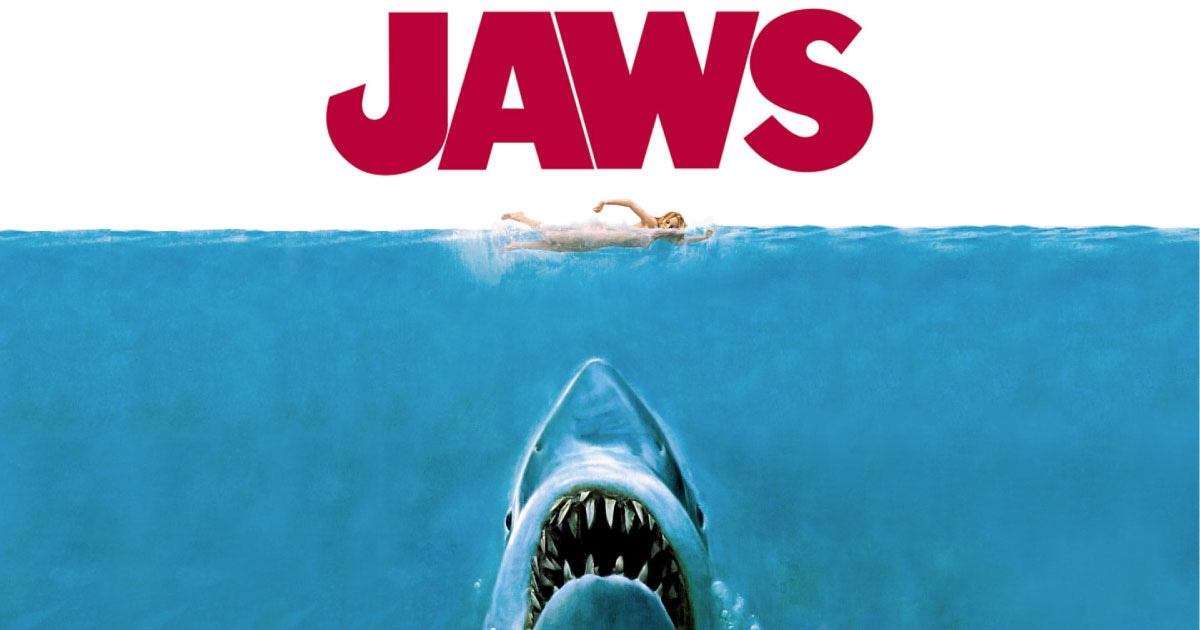
The blockbuster era kicked off with Jaws in 1975, proving audiences would sit through two hours of mounting dread if you gave them a reason to care. I, to this day, vividly remember watching Jurassic Park in the theater peering trepidatiously from beneath my Blossom-style hat #iykyk).
Regardless, each technological shift didn’t dumb down cinema—it opened new storytelling possibilities that reflected how people were experiencing the world.
Movies have never been a fixed medium.
They’re mirrors to culture and society.
When the speed of life changes, the speed of storytelling changes with it.
Here’s what Damon got right: streaming platforms have changed viewing behavior. But here’s where he became misguided: he assumes this is a decline rather than an adaptation.
He points to Adolescence as proof that audiences will still engage with complex storytelling. (Great! Big win!) But he conveniently ignores that the opening of Episode 1 is a riveting action sequence—a tactical police unit surrounding a suburban home, the reveal of a young suspect so scared he pisses his pants….heartbreaking!
The show earns your patience by first earning your attention.
The real issue isn’t that audiences have shorter attention spans. It’s that we’ve been trained to expect interactivity. Young people don’t have attention problems; they play video games for six hours straight. (I know this firsthand from my 13-year-old nephew.) But games offer something movies don’t: agency. Active participation. The illusion of control.
This is where the gamification of storytelling comes in. I’ve written about this before (several times, actually), but it bears repeating: narrative structure is fundamentally shifting because audiences aren’t just consuming stories anymore.
They’re in conversation with them. They’re scrolling, commenting, remixing, and demanding a seat at the table.
Hollywood’s problem isn’t Netflix. It’s that the industry keeps trying to hold tight to “the way things were” instead of asking, “What does storytelling look like now?”
Movies shouldn’t just follow culture—they should be in conversation with it. And that conversation doesn’t require explosions or dumbing down complexity.
It requires listening. Being open to dialogue. Rethinking what immersion actually means in 2026.
The hard truth is when you strip the soul out of art and blame the audience for not showing up, you’ve already lost. The companies and creators who win are the ones asking better questions.
Not “How do we make them pay attention?” but “What do audiences actually want to experience?”
Not “How do we preserve tradition?” but “How do we build storytelling that matters now?”
Because if history has taught us anything, it’s this: every generation thinks the next one is destroying culture. And every generation is wrong (thankfully!). What looks like decline is almost always adaptation. What feels like loss is usually just evolution finding its footing.
The question isn’t whether audiences can still pay attention. It’s whether Hollywood is willing to meet them where they are.
I think the truth here is probably somewhere in between. When audiences are gripped by a story, they'll stay focused on it. But with so much competing for our attention right now, most audiences probably *are* watching Netflix with one eye while scrolling with another. Would that change if Netflix shows were MORE compelling? Does this means stories can't take time to build atmospherically without risking losing viewers? Good questions, and I hope they explore a variety of answers.
But your point about engagement is also key. If I have 30 minutes to kill, I'd rather play a game on my phone than watch a sitcom because the game engages me in more active ways. The flip side of this problem is that we risk turning all stories into "engagement competition," in which they must be as compelling as games or social media feeds, rather than being allowed to exist as their own form, with their own unique rewards for their own pace of engagement.
Great points as always Lindsey, thank you!